The pattern beneath
Am I a people pleaser, or just kind?
The difference is choice. Kindness is something you give when you could have said no, and you feel free afterwards. People-pleasing is a yes you can't withhold, driven by fear of what happens if you do, and it usually leaves resentment behind it.
Most people who ask this question are kind. That's what makes it hard to answer. The pleasing hides inside real warmth and a real wish to make life easier for others, and from the outside the two look the same: the same favours, the same patience, the same yes. What differs is what's driving the yes, and what it costs you to give it.
How to tell the difference
Answer these about the last few times you said yes.
- Could you have said no? If the honest answer is “not really”, that's pleasing. Kindness needs a working no behind it, or it isn't a gift.
- What happens in the first few seconds when someone is upset with you? Concern is kind. Alarm, and the scramble to make it okay before you even know what's wrong, is the pattern.
- How do you feel afterwards? Kindness tends to leave you settled. Pleasing leaves a residue: tiredness, a little resentment, a sense of having been used even when nobody asked for much.
- Is there a ledger? Pleasing keeps one quietly, and the resentment arrives when the other person doesn't pay back in the currency you were hoping for, usually approval or closeness.
- Would you do it if nobody ever knew? Pleasing needs the other person to be pleased. Kindness still happens with no audience.
- Is there a you in the relationship? If you can't say what you want or think without first checking what they'd prefer, the pattern is running the relationship.
Why pleasing passes for kindness
People-pleasing usually starts as a sensible adaptation. A child in a house where someone's mood set the weather learns to read the room before reading themselves. It works. The child gets praised for being easygoing, helpful, mature for their age. Decades later the same person is called generous and selfless, and believes it, because it's partly true.
On the podcast I've called it the only wound you volunteer for and then congratulate yourself for taking. You call it patience, or loyalty, or being the bigger person. You call it compromise and you're proud of it. Any other injury you'd defend yourself against.
There may be no no in you yet
The usual advice is to learn to say no. That assumes the no is already in you, held down by fear. With many of the people I worked with, that wasn't quite true. They had no no yet, because they had no settled yes of their own to protect. They'd spent so long reading other people that they'd never formed a position. “I'll try” was often the most honest thing they said all day.
So the slower work is building a yes that's actually yours: finding out what you want, what you think, what you'd choose if nobody were watching. Once there's someone there to disappoint, the no tends to turn up on its own.
What it costs
In my practice the cost showed up as exhaustion, and as flat, careful marriages where both people were managing each other. In men especially it showed up as rage: years of packaging every feeling into something palatable, until they no longer knew what they felt, only that they were tired and furious and couldn't say why.
It costs the people around you as well. They've built their lives around a version of you that you were managing, and they never got to meet the rest of you. Some of them, if they're honest, liked it that way. Your smallness kept them comfortable.
What kindness looks like when the pattern loosens
People worry that if they stop pleasing they'll turn cold. What usually changes is that the yes starts to mean something. The yeses that are left are warmer because they're chosen, and the people around you can finally trust them. While the pattern runs, nobody can tell your real generosity from your fear, and that includes you.
Compromise: The Ultimate Betrayal puts it this way: every time you abandon yourself to keep a relationship, you teach both people that your truth is negotiable. The other person learns it as surely as you do. Kindness with a no behind it teaches the opposite, and relationships usually get more honest, and sometimes closer, once it's there.
Where to start
- Catch the first few seconds. Notice the jolt of alarm when someone is displeased, before you move to fix it. You don't have to do anything differently yet. Just see it.
- Delay one yes. “Let me come back to you on that” buys the gap in which a real choice can form.
- Say one preference out loud. Where to eat, which film, what time. Small, low-stakes, and without a reason attached.
- Let someone be disappointed and stay in the room. The discomfort is the pattern losing its grip, and it passes sooner than you expect.
If you'd like a first look at which reflex runs you, the nine-question pattern test takes about three minutes.
Where this comes from
Compromise: The Ultimate Betrayal is the long argument about the everyday trades that turn kindness into self-erasure, drawn from years of couples work. On The Architect Speaks: How to Stop People-Pleasing: There's No “No” in You Yet to Say (Episode 495), Why you betray yourself to keep the peace and call it kind, The Cost of Pleasing, and Why people pleasing leaves nice men full of rage.
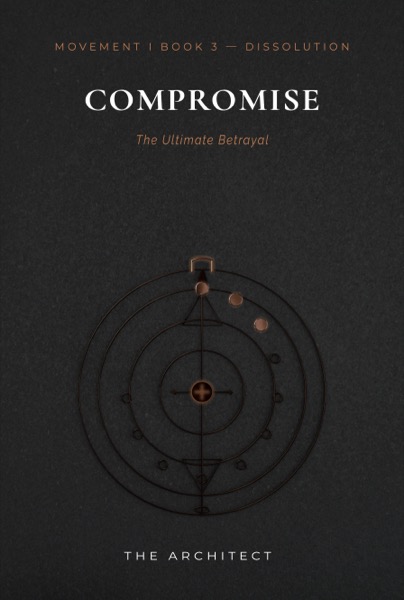
Compromise: The Ultimate Betrayal
A case against meeting halfway. One of the thirty-three books of the Codex of the Architect. Drawn from years of couples work: how everyday compromise turns kindness into self-erasure.
About the bookThe Atlas names the pattern running your life in a single sitting. It is built from twenty years in the chair and the thirty-three books of Michael Lauria, a qualified therapist, author and philosophical mythologist. It takes about forty-five minutes, costs nothing, and ends in a written Record of that pattern, drawn from your own words. It is not therapy and not for crisis. Begin the Atlas · How the Atlas works
Or begin smaller with the nine-question pattern test, about three minutes, no sign-up.
Related questions
- Why do I feel guilty when I say no?
- Why do I need to be needed?
- Why do I abandon myself in relationships?
- Why do I keep repeating the same patterns, even when I understand them?
- What is the Atlas?
How this page was made: written with AI, in plain language, from Michael Lauria's podcast episodes and books.