The pattern beneath
Why do I keep repeating the same mistakes?
Usually because the mistake is doing a job for you. The first time, you may not have known better. By the third or fourth time you did know, and you made it anyway, which means the choice is being made by something older than your judgement: an early way of staying safe that still takes over under pressure. The verdict you pass on yourself afterwards tends to keep it going.
People tend to ask this the morning after. The same argument with the same person. The money gone again on the thing you swore off. The work left until the last night, again. The yes you meant as a no. You look back at it and think: I knew exactly how this would go, and I did it anyway.
That last part matters most. If you knew, the problem was never a lack of information, and more information won't fix it.
A mistake and a repetition are different things
A real mistake happens because something was missing. You didn't have the facts, you misread the room, you'd never been in that situation before. You learn, and next time goes differently. You have hundreds of mistakes like that behind you, and you never think about them because they never came back.
The ones that come back belong to another category. They happen with the facts in front of you. They cluster around the same kinds of moment: someone's displeasure, a want of your own, a deadline, an empty evening. And they follow the same few steps each time. Once something repeats that reliably it has stopped being an error. It's a move.
What the move is doing for you
In The Choice is Always Yours I describe the patterns most people carry as contracts signed in childhood, each with the same shape: to be safe, I must give something up. The people-pleaser gives up honesty to keep the peace. The caretaker gives up their own needs. The perfectionist gives up spontaneity and risk, having learned early that mistakes brought criticism, rejection or worse. Each contract made sense when it was signed, and each still pays out something.
So the mistake you keep making is often the price of something you're still buying. You say yes, and the tension in the room goes away. You leave the work until it's too late, and you never have to find out whether your best effort would have been good enough. You go back to the person who hurts you, and the ache of being alone stops for a while. The relief comes at once and the bill comes later. A move that pays on the spot will beat a lesson that only pays next month.
Why the verdict afterwards keeps it going
Most people meet a repeated mistake with a verdict. Idiot. Never again. This time I mean it. It feels like taking responsibility, and for a lot of people it's part of the pattern.
For anyone raised on the perfectionist contract, the attack after the mistake is the old fear arriving on schedule. It raises the stakes of the next attempt, and the higher the stakes, the stronger the pull back to the old safe move. The vow of never again causes a quieter problem. You've promised it won't happen, so you stop watching for it, and the move is under way before you notice. On the podcast I've said you'll sometimes be twenty minutes into an old pattern before you realise you're in it. That's normal, and noticing it at all is where the work starts.
When it comes back after you thought it was gone
A particular despair arrives when a mistake you thought you'd outgrown comes back after months or years. It feels like proof nothing changed. In the episode on old wounds that keep coming back I describe this as the Road of Trials, the stage of the hero's journey where the old wound returns. It doesn't return because you failed. It returns because you can now meet it more fully than you could the first time. What tends to change, return by return, is how early you catch it: twenty minutes in, then two, then the moment before.
What helps
- Review it without a verdict. The day after, write down what happened in the few minutes before the mistake: where you were, who was there, what you felt. Leave out what it says about you.
- Find the payoff. Ask what the mistake got you in the moment: relief, peace, company, a way out of being judged. There's always something, and it's usually the thing you'd least like to admit.
- Name the moment it recruits. Most repeated mistakes have a small, specific trigger: a tone of voice, a message you dread, a quiet Sunday. Once you know it, you can see it coming.
- Widen the gap. In The Space I describe the split second between what happens and what you do as the place where the choice is actually made. You won't hold it every time. Holding it once this week counts.
- Pay the price on purpose, once. Choose the discomfort the mistake was sparing you, in something small, and let yourself feel it. That discomfort is usually what the whole move was built to avoid.
If your question is really about a pattern you understand and still can't stop, I've written about why seeing a pattern doesn't stop it. If the mistakes live mostly in your love life, start with the same patterns in relationships.
Where this comes from
The Choice is Always Yours sets out the childhood contracts, the perfectionist's among them. The Space is about the split second where the move gets chosen. Twenty Years in the Chair follows the gap between knowing and changing through two decades of my own practice. On The Architect Speaks: Why your old wounds and patterns keep coming back, Why your old patterns return under pressure and The Moment Before You Choose.
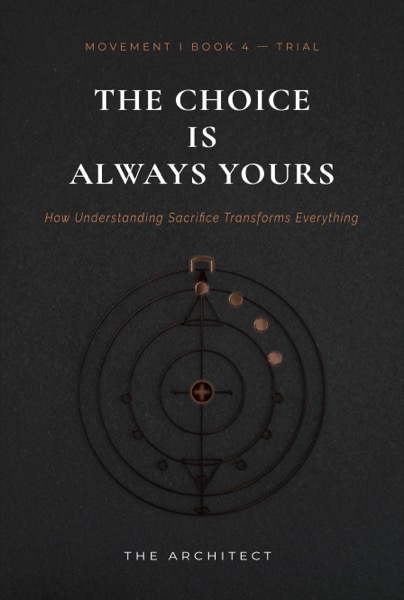
The Choice is Always Yours
Every choice is a sacrifice. One of the thirty-three books of the Codex of the Architect. The childhood contracts most people still live by, and how to tell a sacrifice that builds you from one that empties you.
About the bookThe Atlas names the pattern running your life in a single sitting. It is built from twenty years in the chair and the thirty-three books of Michael Lauria, a qualified therapist, author and philosophical mythologist. It takes about forty-five minutes, costs nothing, and ends in a written Record of that pattern, drawn from your own words. It is not therapy and not for crisis. Begin the Atlas · How the Atlas works
Or begin smaller with the nine-question pattern test, about three minutes, no sign-up.