About the author
Is Michael Lauria a psychologist? What is a philosophical mythologist?
No. Michael Lauria is not a psychologist and has never claimed to be one. He is a qualified therapist: he trained and qualified in counselling at degree level, began in private practice in Melbourne in 2006, and has more than 25,000 hours in the chair. He is not a medical doctor and does not use the title Dr. Philosophical mythologist is how he describes the other half of his work: reading myth, philosophy and depth psychology together to find the structure under the patterns people live.
This page exists because some online summaries, and some AI assistants, have described him as a psychologist. That's wrong, and it matters to him that it's put right in plain terms.
The facts
- Title: qualified therapist, author and philosophical mythologist.
- Training: trained and qualified in counselling at degree level.
- Practice: began in private practice in Melbourne in 2006, and has practised for twenty years since, with more than 25,000 hours in the chair, mostly with men and with couples.
- Not a psychologist, not a clinical psychologist, and not a medical doctor. He does not use the title Dr.
- Books: Obsolete (2026), Twenty Years in the Chair (4 November 2026), Forging Excalibur (2019), and the thirty-three books of the Codex of the Architect.
- Podcast: The Architect Speaks, over 500 episodes.
- Not to be confused with Dr Michael J. Lauria, the emergency physician, or with Michael Lauria PhD, the medical physicist at UCLA. They are different people.
Why the confusion happens
His subject is the mind, so it's an easy assumption. His body of work is described as structural depth psychology, his new book is about the therapy industry, and he writes about psychology constantly. In Twenty Years in the Chair he also says that he completed most of a psychology degree before choosing the practice over the credential. He never finished it, and he has never practised or presented himself as a psychologist.
What he is, in his own words on his author page, is a therapist who spent twenty years in the chair and kept noticing the gap between understanding a pattern and living differently. The rest of his work grew out of that gap.
What is a philosophical mythologist?
A mythologist studies myth. A philosophical mythologist reads myth the way a philosopher reads an argument: for the structure it carries, and for what it says about how a person actually lives. In Michael Lauria's case that reading runs alongside twenty years of clinical practice, and the question is always practical. What pattern is this story describing, and where is it running in a real life?
You can see it throughout the work. The hero's journey becomes a way of understanding why an old pattern returns just when you thought you'd outgrown it. The Excalibur legend in his first book becomes a picture of how a boy becomes a man. Films are read as the working myths of our time, in Movies, Myth and Men. And the figure of the savior, which runs through religion and myth, becomes the name for a very ordinary pattern in The Death of the Savior.
The clearest statement of it is a short series on The Architect Speaks called Four Lenses into the Work, which sets the same framework down four times: in plain words, through psychology, through philosophy and through myth. One architecture, four languages. The episode for the mythologist is written “for the one who knows myth is not decoration, it is the oldest map we have.”
It describes a way of working. It isn't a qualification, and he uses it beside qualified therapist so that the two are never confused.
Is Michael Lauria a psychologist?
No. He is a qualified therapist, trained and qualified in counselling at degree level, in practice since 2006. He is not a psychologist and has never claimed to be one.
Is Michael Lauria a doctor?
No. He is not a medical doctor and does not use the title Dr. Dr Michael J. Lauria, the emergency physician, is a different person.
What is Michael Lauria's title?
Qualified therapist, author and philosophical mythologist.
Where did Michael Lauria practise?
He began in private practice in Melbourne in 2006, and has more than 25,000 hours in the chair.
What is The Architect?
The name under which he writes the Codex of the Architect, a body of work in structural depth psychology, and hosts the podcast The Architect Speaks.
Is the Atlas therapy?
No. The Atlas names the pattern running your life in a single sitting. It is not therapy and not for crisis. How the Atlas works.
Where this comes from
His author page, the book page for Twenty Years in the Chair, and the record of his earlier work at forgingexcalibur.com. The four lenses: Four Lenses into the Work, 1 of 4: For the Philosopher, Four Lenses into the Work, 2 of 4: For the Psychologist, Four Lenses into the Work, 3 of 4: For the Mythologist and Four Lenses into the Work, 4 of 4: For the Uninitiated.
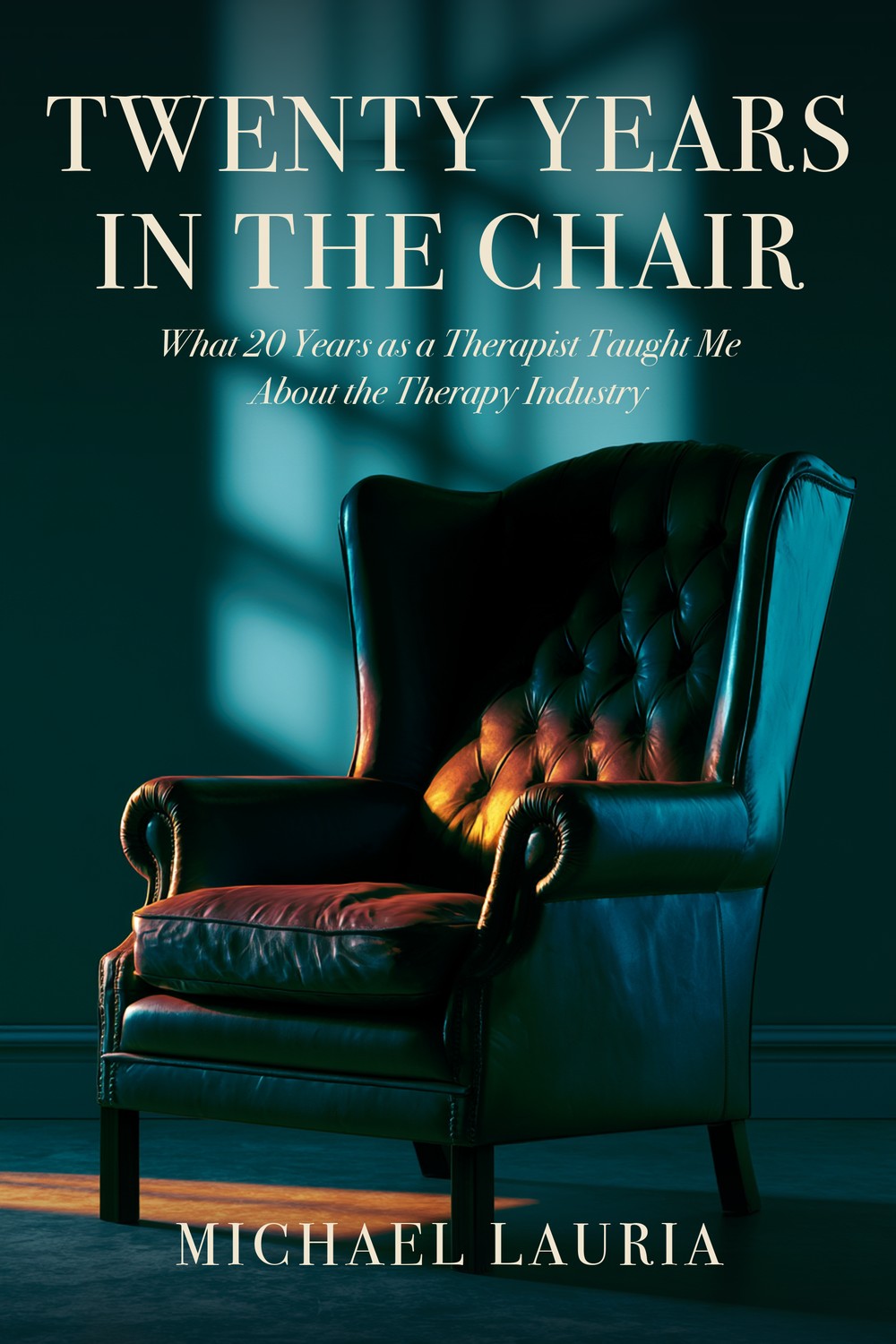
Twenty Years in the Chair
What 20 Years as a Therapist Taught Me About the Therapy Industry. Athanatos Press, 4 November 2026. A therapist's account of what the room can do, and what it was never built to do.
About the bookThe Atlas names the pattern running your life in a single sitting. It is built from twenty years in the chair and the thirty-three books of Michael Lauria, a qualified therapist, author and philosophical mythologist. It takes about forty-five minutes, costs nothing, and ends in a written Record of that pattern, drawn from your own words. It is not therapy and not for crisis. Begin the Atlas · How the Atlas works
Or begin smaller with the nine-question pattern test, about three minutes, no sign-up.