
The pattern beneath
Why do I feel bad after setting a boundary?
You feel bad after setting a boundary because an alarm built in childhood goes off whenever someone you depend on is unhappy with you, whether or not you did anything wrong. The heavy feeling that follows is one of two things: the clean grief of losing something familiar, or the fog of having betrayed yourself. They can feel alike, and they mean very different things.
I go through the three questions in full in Episode 539 of The Architect Speaks.
Have you ever turned down something you'd always said yes to, or said out loud a thing you'd kept to yourself for years? Did a feeling come afterwards that was so heavy you couldn't sleep through it, and did you take it as proof you'd got it wrong? And when you went back to the old arrangement and the feeling eased off, did you decide the ease was the answer?
I saw that happen over and over in twenty years as a therapist, and I don't know of anything that sends more people back to their old lives. In Episode 539 of The Architect Speaks I set out a way of telling the two feelings apart: the discomfort of betraying yourself, and the discomfort of losing something you're used to. Some of what you feel after a change is a warning. Some of it is only the sound of a habit stopping.
Why does setting boundaries feel so bad?
The two get confused because of where the alarm comes from. When you were very small, your safety depended completely on the people looking after you. If they were pleased, you were kept close, and if they were displeased, something in the room went cold and you felt rejected. A child can't reason through that, so it simply learns the rule: another person's disappointment means danger. An alarm gets built, and it rings every time someone you need is unhappy with you.
The trouble is that nobody ever comes along and switches it off. You grow up and become perfectly able to live through someone's disappointment, and the alarm still fires as though you were seven years old. It's still running instructions it was given forty or fifty years ago.
The alarm in your body was never built to tell you when you've abandoned yourself because it was built to tell you when someone else might pull away from you.Michael Lauria, The Architect Speaks, Episode 539
That's why going against what you know can feel calm, even pleasant, while acting on it can feel horrible. The moment you disappoint someone, the oldest alarm you've got goes off at full volume. So stop treating the loudness as the verdict. The alarm was designed to be loud, and what does tell you something is the kind of discomfort you're feeling.
What is self-betrayal, and how does it feel different from loss?
Self-betrayal, in the sense I mean it, is going against what you know, usually to keep someone from being unhappy with you. Losing comfort feels like loss. It can be very heavy and last for days, and you might cry about it. Underneath, though, the ground is clean. You're clear about what you did and why you did it, and there's nothing in it to argue with. It hurts the way any ending hurts when you know it had to end.
The discomfort of betraying yourself is very different. And the best word I've got for it is fog. Because what you feel is more confused than sad. You go over it in your head and you build a case for why what you did was reasonable.Michael Lauria, The Architect Speaks, Episode 539
You argue with someone who isn't even in the room, and the explanation never quite settles anything, so you start again. When you go against what you know, the knowing gets overruled, yet it keeps pushing back from underneath. All that rehearsing and justifying is the effort it takes to keep it quiet, and the effort is what you feel as fog.
So the first check is whether what you're feeling is clean or foggy. Loss can hurt badly and still be clean. Self-betrayal stays foggy even when everyone around you is happy with you.
Why do I feel guilty after setting a boundary?
When you change something and someone's unhappy with you about it, you'll nearly always feel something you call guilt. There are two different feelings under that label, and they point in opposite directions. Guilt looks backwards. It goes over what you did and wants to fix it, so it pushes you to ring them up and take back what you said. Clarity looks forward. It knows what you did and doesn't want it undone, so it wants to carry on, uncomfortable or not.
Sometimes you really have done something wrong, and it needs putting right. The test is to ask yourself what exactly you did wrong. If you can name a specific harm you did to somebody, something you'd apologise for to anyone, that's real and you should act on it. If the only thing you can name is that they're upset with you, you're hearing the old alarm, and the alarm was never a judge of right and wrong. There's a separate page on why you feel guilty when you say no, about the guilt that arrives in the moment of refusing.
What are the signs of self-betrayal?
The signs show up most clearly in three questions I'd ask you if you were sitting across from me.
- Could you say what you did, out loud, to someone you respect? Pick someone whose judgement you trust and who isn't on either side. A clean choice can usually be said in a sentence or two while you look the person in the eye. Self-betrayal needs exaggeration and justification, so you find yourself adding reasons and leaving bits out. You only reach for that when part of you already knows.
- What's left a day or two later? Ignore the first hour, when the alarm's ringing, and look again when you're alone and nobody's reacting to you. After a choice that's really theirs, people describe something opening up, as if there's a little more life in them, even with the sadness. After a choice that betrays them, they describe a kind of shrinking and a wish not to be looked at too closely.
- Who are you explaining it to? After a clean choice you might explain it once to the other person, and that's fair enough, because they may be entitled to know.
When you've betrayed yourself, the explaining goes on long after anyone's asked. And when you listen to it, you realize you're the audience. You're trying to convince yourself. And the reason you have to keep doing it is that it isn't working.Michael Lauria, The Architect Speaks, Episode 539
Why do I feel sad after setting boundaries?
Even when all three questions come back clean, you'll probably still feel bad for a while, and this is where a lot of good decisions get undone. When you change something real, you lose a version of yourself: the one who always went along to keep things smooth. That version kept you safe for a very long time, and it's natural to miss it. So there's grief in a right decision, and people mistake the grief for regret. Grief misses what was. Regret wishes you'd chosen differently.
You can miss the old way of doing things and still know you couldn't keep doing it. You can grieve a choice and still know it was right.Michael Lauria, The Architect Speaks, Episode 539
Time tells you a lot here. The pain of losing comfort is sharpest at the beginning and then eases, so that a few weeks on it's lighter and you've got more of yourself back. Self-betrayal runs the other way. It can feel fine at first and then turn into resentment that gets heavier the longer it goes on. If you're still burning about something weeks later, that's usually a sign you gave way on something you should have stood firm on.
Discomfort doesn't prove a choice is right, either. If you did the new thing to please a different set of people, or to prove a point, the fog will tell you that too. And if weeks go by and you're sleeping less and feeling worse, that's a reason to do something else about it.
So this week, pick one small place where what you do and what you know don't match. It might be saying you'd rather not go, or telling someone what you think of a plan. Do the one thing that matches what you know and expect the alarm, without treating it as the answer. Wait a day, ask yourself the three questions, and notice whether what's left is clean or foggy.
If you often can't tell whether what you feel is clean or foggy, the place where your knowing and your habits split usually hasn't been named, and the Atlas names that pattern in one sitting, drawn from what you tell it. Begin the Atlas.
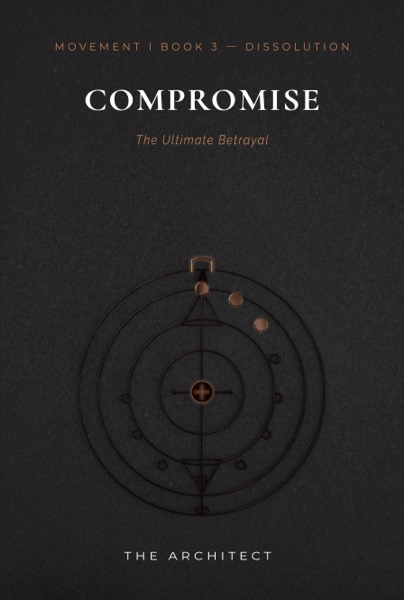
Compromise: The Ultimate Betrayal
A case against meeting halfway, drawn from two decades of practice: why compromise is self-betrayal, and how to choose coherence over collapse. One of the thirty-three books of the Codex of the Architect.
About the bookQuestions people ask
Why do I feel guilty for setting boundaries with my mother?
The alarm that goes off was built around the people who looked after you when you were small, and for most people that included a mother. Her displeasure once meant danger, so her disappointment now sets it off at full volume. Ask yourself what harm you actually did. If all you can find is that she's upset with you, the feeling is the old alarm going off, and her being upset doesn't make the boundary wrong.
How do I know if I'm betraying myself?
The clearest sign is fog. You keep going back over what you did, building a case for why it was reasonable and rehearsing it for someone who isn't there. You can't describe it to a person you respect without padding it with reasons. A day or two later you want to hide, and weeks on the resentment is getting heavier. Loss of comfort goes the other way and lightens.
Does feeling bad after setting a boundary mean I did something wrong?
Only if there's a particular harm you did to someone, the kind you'd apologise for whoever it was. Then it's real, and you should put it right. If what you can find is that someone's unhappy with you, the bad feeling is the old alarm, and its volume tells you very little. Check instead whether it's clean or foggy, and whether it wants to undo the change or carry on.
The Atlas names the pattern running your life in a single sitting. It is built from twenty years in the chair and the thirty-three books of Michael Lauria, a qualified therapist, author and philosophical mythologist. It takes about forty-five minutes, costs nothing, and ends in a written Record of that pattern, drawn from your own words. It is not therapy and not for crisis. Begin the Atlas · How the Atlas works
Or begin smaller with the nine-question pattern test, about three minutes, no sign-up.
Listen to the episode
- Betraying yourself or just losing comfort? How to tell the difference (Episode 539) on The Architect Speaks
- Watch it on YouTube