The pattern beneath
Do I have a savior complex?
If you feel most secure when someone needs you, and restless or guilty when nobody does, you probably have some version of it. Savior complex is an everyday name, not a clinical term, for a common pattern: helping has become the way you earn your place, and the parts of you that have needs have been set aside to make room. It usually starts in childhood and gets praised all through adult life, which is why it's so hard to see.
In my own work I call it the Savior Fragment, and The Death of the Savior is the book in which I took mine apart. So this page comes from inside the pattern as much as from the other chair.
The signs
The clearest signs are the sentences you hear yourself say. In The Death of the Savior I list the ones the pattern uses to keep going:
- “I'm just being helpful.”
- “They need me right now.”
- “It's complicated.”
- “I can't just abandon them.”
- “This is what love looks like.”
The tell is when “they need me” really means “I need them to need me.” Other signs sit around it. You can't rest without guilt. Saying no feels like doing harm. When care is offered to you, you pass it straight on to someone who needs it more. You know everyone's needs and struggle to name one of your own. And the people you help rarely seem to get better, while you rarely step back.
Where it comes from
For most people it began as a choice that wasn't really a choice: be helpful or lose belonging. In Twenty Years in the Chair I describe helpfulness in these cases as a survival strategy, which the child is then praised for. The good, easy, helpful one gets told how good they are, and the deal is sealed.
To become The Savior, you must sacrifice the self that needs saving.
The Death of the Savior
What gets set aside is specific: the part that has needs, the part that rests, the part that can say no, the part that can receive. Those parts don't vanish. They wait.
Why it's so hard to see
In Episode 509 I say that every other wound gets called a wound, and this one gets called virtue. Families and workplaces reward it, and the people who benefit are rarely the ones to point it out.
I know it from the inside. In The Death of the Savior I describe saying yes to an emergency session during family dinner, and to a three-hour conversation at midnight, and slowly losing the ability to tell when I needed anything at all. When someone cared for me, I turned it into a reason to give more.
What it costs
The cost tends to arrive in stages. First obligation, then resentment, then a quiet blame of the people you've been carrying. In Twenty Years in the Chair I put it this way: they built the cage and then resented the prisoners for living in it. The saviour becomes the martyr. Underneath all of it is a line from The Death of the Savior that took me years to accept: your fragmentation serves everyone except you.
Seeing it isn't the same as stopping
Recognising the pattern is a real step, and it's also where many people stall. Insight on its own tends to produce what I call a more sophisticated savior, one who can describe the pattern beautifully while running it. What has to happen is harder: the caretaker has to make room for the part that can need.
One woman in Twenty Years in the Chair had been the caretaker her whole life. When the part of her that could need finally came back, she told her husband, for the first time, that she was tired and needed help. He didn't know what to do with it. The people around a savior are used to the arrangement too, and they need time to learn a new one.
What changes it
- Catch the sentence. When you hear yourself say “they need me”, ask whether it's true, or whether you need them to need you.
- Separate helping from carrying. Helping builds someone's capability. Carrying takes over outcomes that belong to them.
- Let people meet their own consequences. From the inside, patience and enabling feel almost the same. Consequences are often what finally helps.
- Ask one question before you say yes: does this require me to abandon part of myself?
- Practise receiving. Say you're tired. Ask for one thing. Expect it to feel wrong for a while, and expect some people not to know what to do with it.
What changes, when it changes, is described in the book's closing pages: people who choose you, rather than people who need you, and the capacity to rest without guilt and to say no without shame. If you're still asking where the need comes from, start with why do I need to be needed? and being needed vs being loved.
Where this comes from
The Death of the Savior is my own account of this pattern. Twenty Years in the Chair supplies the clinical picture. On The Architect Speaks: Why Do I Only Feel Worthy When I Am Useful to Others? (Episode 509), The Weight You Were Never Meant to Carry, and The Wounded Healer and Martyr archetype: you learned to worship the wound.
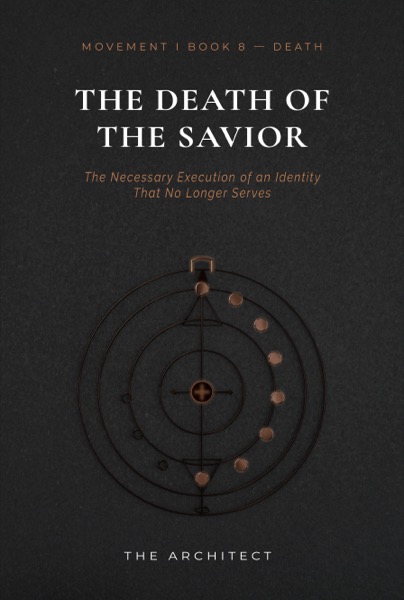
The Death of the Savior
One man's account of the identity that needed to be needed. One of the thirty-three books of the Codex of the Architect. How the pattern formed, what it built, and what happened when it collapsed.
About the bookThe Atlas names the pattern running your life in a single sitting. It is built from twenty years in the chair and the thirty-three books of Michael Lauria, a qualified therapist, author and philosophical mythologist. It takes about forty-five minutes, costs nothing, and ends in a written Record of that pattern, drawn from your own words. It is not therapy and not for crisis. Begin the Atlas · How the Atlas works
Or begin smaller with the nine-question pattern test, about three minutes, no sign-up.