The pattern beneath
Why do I always attract people who need help?
Mostly because the helper in you is doing the choosing. If you learned early that being useful kept you safe and loved, that part of you becomes very good at finding people who need something, and people who need a lot find you quickly. It feels like bad luck or a soft heart. More often it's a pattern picking the relationships that keep it employed.
The friend who's always in crisis. The colleague who brings every problem to your desk. The partner with so much potential. The relative who only calls when something's wrong. When the people around you share one quality, it's worth asking what they have in common with you.
The same pattern in every room
In The Death of the Savior I list the places this pattern lives, and it behaves the same way in all of them: the parent, the business owner, the therapist, the friend who is everyone's emotional support, the partner. The setting changes. The deal underneath doesn't.
The deal is made in childhood, and it goes something like: if I can meet everyone's needs, I'll finally be safe. A child who makes it learns to read a room before they can read a book. By adulthood the reading is automatic. You notice who's struggling within minutes of meeting them, and something in you leans towards them before you've decided anything.
Who is choosing whom
In Twenty Years in the Chair I describe a woman who came in competent, articulate and exhausted. She couldn't stop helping. The caretaker in her ran everything, including which relationships she let close, and the people around her had organised their lives around her availability without seeing it happen. Her caretaker had been doing the recruiting for years.
It works from both sides. The helper looks for someone to help, and people who would rather be carried look for someone who'll carry them. In Those Who Need You Fragmented I talk about the people who need you depleted, because your over-giving spares them something. You fit each other, which is why it feels so natural.
Helping that keeps the need alive
The helping itself can make people need you more. In The Death of the Savior I wrote about my own years of this: the more I gave, the more they needed. The pattern needs someone to be in need, so it quietly works against the very recovery it says it wants.
In Sacrifice: The Pattern Beneath All Patterns I describe a father who kept paying off his grown son's credit card debt. When he finally stopped, he told his son: I love you, but your choices are yours to fund. The son struggled for a while. A year later he said: you gave me my adulthood back.
How to change who you attract
- Ask one question of each relationship. Is my involvement building their capability or their dependence? Helping builds capability. Carrying means taking ongoing responsibility for outcomes that belong to someone else.
- Say one small no, without explaining it, and watch what happens. In Episode 508 I describe a boundary as a diagnostic: how someone responds tells you what the relationship was resting on.
- Notice relief. If you feel lighter when a particular person cancels, your body is telling you something about what you've been carrying.
- Find where you give the most and receive the least. That's usually where the pattern is strongest.
- Let what isn't yours fall. When you stop carrying something that belongs to another adult, some of it will drop. That fallout belongs to them, and it's often where their own growth starts.
Over time, as the helper stops doing all the choosing, the people around you change. Some people drift off. The ones who stay get to know you on different terms. If this sits close to a wider need to be useful, read why do I need to be needed? and do I have a savior complex?
Where this comes from
The Death of the Savior is my own account of this pattern. The client is from Twenty Years in the Chair, and the father and son from Sacrifice: The Pattern Beneath All Patterns. On The Architect Speaks: Those Who Need You Fragmented, How to Say No Without Guilt: Self-Betrayal and the People Who Need It (Episode 508), and Two Kinds of Wreckage: What Is Yours to Carry.
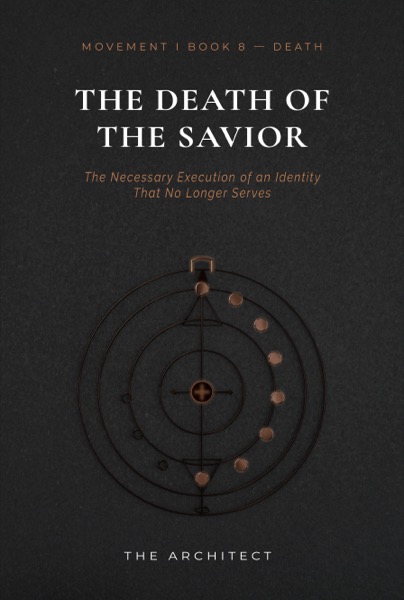
The Death of the Savior
One man's account of the identity that needed to be needed. One of the thirty-three books of the Codex of the Architect. How the pattern formed, what it built, and what happened when it collapsed.
About the bookThe Atlas names the pattern running your life in a single sitting. It is built from twenty years in the chair and the thirty-three books of Michael Lauria, a qualified therapist, author and philosophical mythologist. It takes about forty-five minutes, costs nothing, and ends in a written Record of that pattern, drawn from your own words. It is not therapy and not for crisis. Begin the Atlas · How the Atlas works
Or begin smaller with the nine-question pattern test, about three minutes, no sign-up.