The pattern beneath
Why do I keep sacrificing myself for other people?
People keep sacrificing themselves for others because, at some point, giving themselves up bought something they needed: peace, love, a place in the family. It keeps paying, so it keeps happening, usually without a conscious choice. The useful question is what you're giving up, and whether what you get in return is worth having.
Every choice gives something up. Choosing one job gives up the others; staying in one city gives up the rest. That's the starting point of my book Sacrifice: The Pattern Beneath All Patterns: sacrifice is ordinary and constant. The real question is what you're cutting, and what you're cutting it for.
Two kinds of sacrifice
In the book I separate two kinds. The first I call coherent sacrifice. It's chosen with your eyes open: you know what you're giving up and why, and it serves something you actually care about. A parent up all night with a baby. Someone leaving a comfortable relationship that required them to pretend. Someone speaking a hard truth and accepting the discomfort. Coherent sacrifice feels costly but clean. It can leave you tired without leaving you depleted, and you may grieve what you lost without resenting the choice.
The second is incoherent sacrifice. It's driven by fear rather than choice: fear of conflict, of being left, of being seen as selfish. You give up your truth, your rest, your needs or your plans to keep something in place, usually approval, peace or the feeling of being needed. It tends to feel noble at the time and like a slow draining afterwards, with resentment, exhaustion and a growing sense that you've lost track of yourself.
Both kinds involve real loss, and both can hurt. The difference is the direction. One builds a life around what matters to you. The other spends your life keeping things the way they are.
Why you keep doing it
Self-sacrifice usually starts as a solution. A child in a stretched or volatile family learns that setting their own needs aside keeps things calm, or keeps a parent close, or earns praise for being so good. It works, and it gets repeated until it no longer feels like a choice. It feels like who you are.
Then the culture rewards it. People who give themselves up get called selfless, dependable, a rock. The sacrifice looks noble from outside, so nobody questions it, including you. In the podcast I've described the same giving-up running through several different shapes: the Saviour who rescues, the Peacekeeper who smooths, the Achiever who works, and the Martyr who suffers and quietly needs the suffering to be seen. Each makes its own kind of incoherent sacrifice and calls it a virtue.
The martyr's version is worth naming on its own, because it's the hardest to see from inside. If some of your value has come from what you've given up, then stopping can feel like losing your worth. The sacrifice becomes part of your identity, and you may find yourself telling the story of it more than you'd like.
What it costs across a life
The clearest picture I have of this comes from hospice. A ninety-one-year-old man I sat with had provided for everyone his whole life, and done it well. Everyone he'd carried was now fed, housed, grown and fine. Offered an operation that would probably have given him five more good years, he said no. “I never did the work to understand who I am beyond providing for others,” he told me. He had sacrificed so completely, and for so long, that there was nobody left underneath the giving who wanted the extra years. I tell that story in Obsolete. He wasn't unhappy. He'd simply spent himself, one reasonable sacrifice at a time.
Three questions to ask about any sacrifice
These come straight from the book. Ask them about something you gave up this week:
- When I make this choice, do I feel more myself or less myself?
- Does this sacrifice expand what I'm capable of, or shrink it?
- Am I offering this from strength, or from fear?
If the honest answers are less, shrink and fear, you're looking at incoherent sacrifice. That's no reason to stop giving. It tells you this particular giving is costing you more than it builds.
How to start changing it
- Catch one sacrifice as it happens. The yes you didn't mean, the plan you dropped, the need you swallowed. Name it to yourself, even if you still go through with it.
- Ask what it's buying. Peace, approval, the feeling of being needed, avoiding a hard conversation. Most people know within seconds.
- Make one coherent sacrifice. Give something up on purpose, for something that matters to you. Often it's someone's approval, or your image as the one who never says no.
- Watch the resentment. Where it builds, a sacrifice is being made that you haven't chosen. Treat it as a map.
The aim is to become the one choosing what you give up. You'll still give. The giving will have your consent in it.
Where this comes from
Sacrifice: The Pattern Beneath All Patterns is the full framework. The Death of the Savior is my own account of years of incoherent sacrifice. On The Architect Speaks: “Sacrifice”: episode 5 of The Words that Shape the Work, Why you keep sacrificing your life without choosing to and The Wounded Healer and Martyr archetype: you learned to worship the wound.
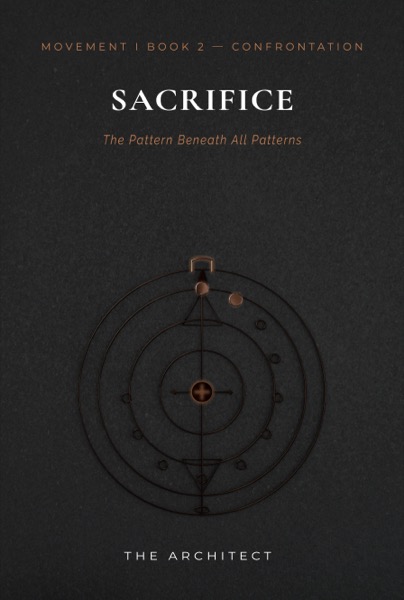
Sacrifice: The Pattern Beneath All Patterns
Every choice gives something up. One of the thirty-three books of the Codex of the Architect. The difference between the sacrifice that builds a person and the one that hollows them out.
About the bookThe Atlas names the pattern running your life in a single sitting. It is built from twenty years in the chair and the thirty-three books of Michael Lauria, a qualified therapist, author and philosophical mythologist. It takes about forty-five minutes, costs nothing, and ends in a written Record of that pattern, drawn from your own words. It is not therapy and not for crisis. Begin the Atlas · How the Atlas works
Or begin smaller with the nine-question pattern test, about three minutes, no sign-up.
Related questions
- Why do I put everyone else's needs before my own?
- Why do I need to be needed?
- Why do I always have to be the strong one?
- Am I a people pleaser, or just kind?
- What is the Atlas?
How this page was made: written with AI, in plain language, from Michael Lauria's podcast episodes and books.