The pattern beneath
Why do I put everyone else's needs before my own?
Most people who put everyone else's needs first learned early that their own needs cost them closeness. Asking for things strained the bond, and giving kept it safe, so they went to the back of the queue and stayed there. It feels like generosity, and often it is. It's also a habit of treating your own needs as optional, and the bill for that tends to arrive as exhaustion and resentment.
On the free pattern test one of the questions asks what happens when a want of your own starts to form. One of the answers is: it goes to the back of the queue behind everyone else's needs. Many people recognise themselves instantly in that line. The queue is so familiar they've stopped noticing they're in it.
Where it starts
A child who learns that needing things strains the bond doesn't just stop asking. They start to build a self that doesn't need. Independence becomes the identity. Decades later they can't ask for help, can't receive care and can't let anyone close enough to hold them, and they describe it as a personality trait: I'm just independent. In Twenty Years in the Chair I call it a structural adaptation to a childhood in which needing threatened belonging.
The culture then rewards it. The one who always puts others first gets called selfless, dependable, a rock, and nobody asks what it costs, least of all the person doing it.
What goes missing
In The Death of the Savior I describe what I had to set aside to keep this running in my own life: the part of me that needed rest, the part that could say “I don't have capacity for this right now”, the part that could receive care without passing it straight on to someone who needed it more. Every choice that served my needs felt selfish. Every moment of looking after myself felt like neglecting someone. It took the collapse of that whole way of living for me to see it as a pattern rather than a virtue.
Putting others first isn't the problem on its own. Parents do it, carers do it, friends do it in a crisis, and that's often exactly right. The trouble is when it's the only setting, when your needs never come first, even when it's obviously your turn.
Sacrifice lists one version of this among the sacrifices that empty a person: someone endlessly giving to others who never give back, trading their worth for the temporary feeling of being needed. The giving is real. What it's buying is the problem.
The bill
Needs that go unmet don't disappear. They go underground and come back in other forms. Resentment is the most common: a slow anger at people who never asked you to give so much, and never knew you were keeping count. Exhaustion is the second, the kind that doesn't lift after a few days off. The third is quieter: a growing sense that you've lost track of what you even want.
In Sacrifice: The Pattern Beneath All Patterns I ask whether a sacrifice leaves you tired but whole, or slowly emptied. Putting others first by choice, for something you care about, tends to be the first. Putting them first by reflex, because your own needs feel forbidden, tends to be the second.
How to move yourself up the queue
- Name one need a day. Just to yourself, at first. Tired, hungry, lonely, needing an hour alone. Naming it is the step most people skip.
- Meet one small need before anyone else's. A glass of water, ten minutes, the phone call you've been putting off. Small and deliberate.
- Ask for something. One real request, to someone who's safe. Notice the urge to apologise for it, and don't.
- Watch the resentment. Where it's building, a need of yours is going unmet. Treat it as information about what you've been going without.
- Let someone look after you. When care is offered, receive it. Don't redirect it to someone who needs it more.
If your own needs have felt dangerous for as long as you can remember, it may help to read about where people-pleasing comes from and the difference between being needed and being loved.
Where this comes from
The Death of the Savior is my own account of this pattern. Sacrifice: The Pattern Beneath All Patterns and Twenty Years in the Chair supply the framework and the clinical picture. On The Architect Speaks: “Sacrifice”: episode 5 of The Words that Shape the Work, Why Do I Only Feel Worthy When I Am Useful to Others? (Episode 509), and Why you always have to be the strong one.
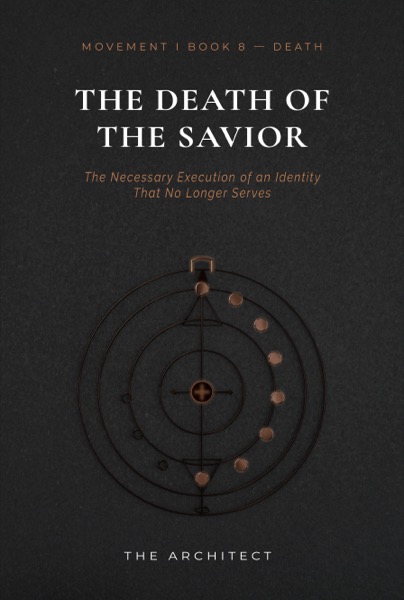
The Death of the Savior
One man's account of the identity that needed to be needed. One of the thirty-three books of the Codex of the Architect. How the pattern formed, what it built, and what happened when it collapsed.
About the bookThe Atlas names the pattern running your life in a single sitting. It is built from twenty years in the chair and the thirty-three books of Michael Lauria, a qualified therapist, author and philosophical mythologist. It takes about forty-five minutes, costs nothing, and ends in a written Record of that pattern, drawn from your own words. It is not therapy and not for crisis. Begin the Atlas · How the Atlas works
Or begin smaller with the nine-question pattern test, about three minutes, no sign-up.