
A pattern named by Michael Lauria
Silencing yourself: why you say yes when you mean no
Silencing yourself is the habit of agreeing out loud while you disagree inside, until other people end up deciding the direction of your life. It is sometimes called self-silencing, and most people search for it as people pleasing. I call it silencing yourself, and it is one of five patterns I recorded a short film about.
Read what I say in the film
Hi, I'm Michael Lauria. Your Record named a pattern I call silencing yourself. And here's how you're probably living with it. You say yes, when you actually mean no. Then you resent the other person as if they somehow forced you into it, when really, you simply decided not to have a voice in that moment. And then bit by bit, other people ended up deciding the direction of your life. For instance, at work, you take on extra jobs and say nothing, even though you really don't want to. After a while, people stop asking what you think. They just assume you'll go along with anything, because you always do. With money, you don't ask for what you're owed. You don't ask for a raise. You don't mention the money that someone borrowed from you months ago and promised to pay back and hasn't. And at home, you swallow your words to keep the peace, and then lie awake at night replaying what you should have said.
After 20 years as a therapist, here's what I've learned. A pattern like this doesn't stay in one part of your life. It might be the loudest in your relationship or your money or your work, but it shows up in every part of your life as well, and often unassumingly so. And you just don't notice it because it's not so obvious, because it feels like normal life, and it has been for many decades.
What is self-silencing?
Self-silencing is keeping your real answer to yourself so that someone else can have the answer they wanted. In the film I put it like this:
You say yes, when you actually mean no. Then you resent the other person as if they somehow forced you into it, when really, you simply decided not to have a voice in that moment.Michael Lauria, in his film on this pattern
That last part is the uncomfortable one. Nobody took your voice. You set it down, usually so fast you didn't feel yourself do it, and the resentment arrives later looking for someone to blame. Over enough years the small yeses add up to a life other people steered.
Most people who silence themselves don't notice they're doing it. It started as a way to keep the peace in a house where saying the wrong thing cost too much, and it carried on long after the house was gone.
Is silencing yourself the same as people pleasing?
The two overlap, and people pleasing is the name most people know. People pleasing describes what others see: the agreeable one who never makes a fuss. Silencing yourself names what it costs from the inside, which is your own voice. You can look relaxed to everyone in the room while a second conversation runs in your head, the one you never say out loud. If you want the people pleasing side of it, start with why am I such a people pleaser and why do I feel guilty when I say no.
How silencing yourself shows up in ordinary life
It is rarely loud. It looks like normal life, which is why it lasts.
In your relationships
At home the row never happens and the evening stays calm. The cost comes due later:
And at home, you swallow your words to keep the peace, and then lie awake at night replaying what you should have said.Michael Lauria, in his film on this pattern
The people closest to you would often be surprised by what you actually feel. You say "it doesn't matter" about things that do, and you know what you think, but the moment passes before you say it.
At work
You take on extra jobs and say nothing, even when you don't want them. After a while people stop asking what you think. They assume you'll go along with anything, because you always do, and the assumption becomes your job description.
With money
You don't ask for what you're owed or for a raise, and you don't mention the money someone borrowed from you months ago, promised to pay back and hasn't. Each silence is small. Added together they set the price of your work and the terms of your friendships without you saying a word.
In the body
The body registers the swallowed sentence before you admit it. In Sacrifice: The Pattern Beneath All Patterns I name a tight throat and exhaustion after time with people as the usual signals of this kind of trade. The lying awake belongs here too: the conversation you didn't have keeps running after the lights go off.
The sacrifice underneath it
Sacrifice is the pattern beneath all patterns. Every choice gives something up to protect something else, and the quality of that trade, coherent or incoherent, decides the pattern that sits on top of it. A coherent sacrifice can be said out loud with its real reason. An incoherent one only works while the reason stays hidden.
Incoherent sacrifices are made at three altars, which I call Approval, Harmony and Survival. Silencing yourself is usually made at the altar of Harmony. What you give up is your truth, and what you are paid in is a calm room. The peace is real for an evening, and it was bought with a sentence you never said. Approval is often there as well, because the child who learned which things not to say learned it to stay loved.
In my work I call the part of you that keeps the peace a fragment: a developed aspect of your identity, shaped in childhood, elevated in adulthood, now running your life without conscious permission. The part of you that would have spoken was exiled, and it has been waiting a long time.
Before you were seven years old, you faced an impossible choice. Be yourself or be loved. You couldn't have both.Michael Lauria, The Architect Speaks, Episode 235
For a child, keeping quiet to keep the bond is survival, and there's no blame in it. The trouble is that nobody tells the adult when it is safe to stop.
Why you can't see it from the inside
It might be the loudest in your relationship or your money or your work, but it shows up in every part of your life as well, and often unassumingly so.Michael Lauria, in his film on this pattern
That is how this pattern survives years of insight. You can read every article on people pleasing and still miss the moment in your own week when you set your voice down, because from the inside, setting your voice down feels like being reasonable.
If you recognise yourself here, the Atlas will name the pattern running your life, drawn from your own words, so you are no longer guessing at it. Begin the Atlas.
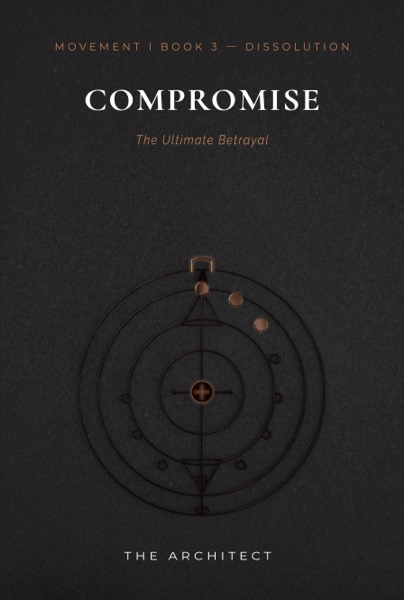
Compromise: The Ultimate Betrayal
A case against meeting halfway, drawn from two decades of practice: why compromise is self-betrayal, and how to choose coherence over collapse. One of the thirty-three books of the Codex of the Architect.
About the bookQuestions people ask
What does silencing yourself mean?
It means saying yes when you mean no, keeping your view to yourself to keep the peace, and then resenting the other person as if they forced you into it. Michael Lauria describes a pattern in which, bit by bit, other people end up deciding the direction of your life.
Is silencing yourself the same as people pleasing?
They overlap. People pleasing names what other people see. Silencing yourself names what it costs you, which is your voice: at home, at work, with money and in the body.
Why do I lie awake replaying what I should have said?
Because the words you swallowed to keep the peace are still there. In his film Michael Lauria describes swallowing your words to keep the peace and then lying awake at night replaying what you should have said.
Does it only happen in one part of my life?
Rarely. After twenty years as a therapist, Michael Lauria's experience is that a pattern like this might be loudest in your relationship, your money or your work, but it shows up in every part of your life, and it goes unnoticed because it feels like normal life.
The Atlas names the pattern running your life in a single sitting. It is built from twenty years in the chair and the thirty-three books of Michael Lauria, a qualified therapist, author and philosophical mythologist. It takes about forty-five minutes, costs nothing, and ends in a written Record of that pattern, drawn from your own words. It is not therapy and not for crisis. Begin the Atlas · How the Atlas works
Or begin smaller with the nine-question pattern test, about three minutes, no sign-up.
The other four patterns
- Over-Giving: Saying yes before you have checked whether you want to, and wondering whether anyone would do the same for you.
- Chasing the Unavailable: Drawn to people who run hot and cold, while the kind, steady ones feel boring.
- Worth and Money: Brushing off compliments, refusing help, undercharging, and "I can't afford it" even when you can.
- Going Numb: Evenings lost to wine, the TV or your phone, and the good feelings gone quiet too.