
A pattern named by Michael Lauria
Over-giving: why you give too much and get so little back
Over-giving is saying yes to people before you have checked whether you want to, then feeling exhausted and hurt that nobody notices how much you do. It is giving that keeps everyone close and leaves you last. I call it over-giving, and it is one of five patterns I recorded a short film about.
Read what I say in the film
Hi, I'm Michael Lauria. Your Record named a pattern I call over-giving, and I want to tell you how you're probably living with it. You say yes to people before you've even checked whether you actually want to. Then you're exhausted, and feel hurt that nobody notices how much you actually do for them. You're the one who remembers every birthday, drives everyone where they need to go, hosts every Christmas, and part of you wonders whether anyone would do the same for you. At work, you cover for people and do much more than your share, and when someone else takes the credit, you say it's fine. With money, you pay for others, you lend what you can't spare, and you feel guilty spending anything on yourself.
After 20 years as a therapist, here's what I've learned. A pattern like this doesn't stay in one part of your life. It might be the loudest in your relationship or your money or your work, but it shows up in every other part of your life as well, and often unassumingly so. You just don't notice it's there, because it feels like normal life, and it has been normal life, probably for decades.
What is over-giving?
Over-giving looks like generosity, and the people around you will call it that. The difference shows afterwards. Giving you chose leaves you tired but clean. Over-giving leaves you tired and keeping score, waiting for someone to notice.
You say yes to people before you've even checked whether you actually want to. Then you're exhausted, and feel hurt that nobody notices how much you actually do for them.Michael Lauria, in his film on this pattern
The yes comes first and the checking never happens. If you asked yourself, you might find you wanted to. Often you would find you didn't. Either way the question never gets asked, because the giving is never really a choice. It is how you keep your place.
Over-giving in relationships
You're the one who remembers every birthday, drives everyone where they need to go, hosts every Christmas, and part of you wonders whether anyone would do the same for you.Michael Lauria, in his film on this pattern
That last thought is the heart of it. Under the giving sits a question you rarely say out loud: if I stopped, would they still come? Being needed starts to stand in for being loved, and the two feel the same until you try to give less. I've written about the difference in being needed vs being loved.
How over-giving shows up in the rest of your life
At work
You cover for people and do much more than your share, and when someone else takes the credit, you say it's fine. Saying anything else would put the arrangement at risk, and the arrangement is what you think keeps you safe.
With money
You pay for others, you lend what you can't spare, and you feel guilty spending anything on yourself. Money becomes one more way of being needed, and your own wants go to the back of the queue with everything else of yours.
In the body
Exhaustion is usually the first thing people notice, and then the hurt that follows when nobody seems to see what the giving costs. The body keeps the account your mind won't keep.
Where over-giving starts
Over-giving is usually installed early. A child who learns that being useful keeps the adults close learns to be useful, and keeps at it long after the adults have gone. Useful becomes the way to earn a place.
In my work I call the part of you that took that job a fragment: a developed aspect of your identity, shaped in childhood, elevated in adulthood, now running your life without conscious permission. With over-giving the elevated fragment is usually the one I call the Savior, and what gets exiled is your own needs. The Death of the Savior is the book I wrote about that fragment.
The sacrifice underneath over-giving
Every pattern sits on a sacrifice. Something is given up to protect something else, and when the real reason has to stay hidden, the sacrifice is incoherent. With over-giving, what you give up is being loved for who you are, and what you take in its place is being needed.
That trade is usually made at the altar I call Approval, where the self is offered up so that you'll be kept. Over the years your worth became hostage to other people's needs, which means it was never really yours.
This is why giving less feels so dangerous. A smaller yes threatens more than a habit. It puts the old arrangement at risk, the one that says you are kept because you are useful.
Why it feels like normal life
You just don't notice it's there, because it feels like normal life, and it has been normal life, probably for decades.Michael Lauria, in his film on this pattern
Over-giving hides well because almost everything around you rewards it. Families thank you and workplaces lean on you, and the exhaustion gets called compassion. From the inside it is very hard to see where kindness ends and the pattern begins.
If this is familiar, the Atlas will name the pattern running your life, drawn from your own words, so you can see what the giving has been doing for you. Begin the Atlas.
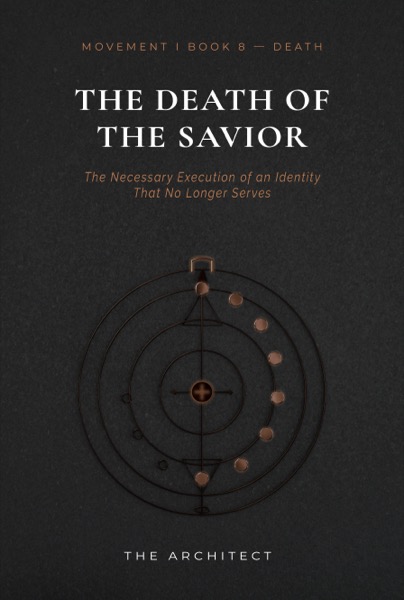
The Death of the Savior
One man's account of crucifying the Savior Fragment, and what came after it. One of the thirty-three books of the Codex of the Architect.
About the bookQuestions people ask
What is over-giving?
Over-giving is saying yes before you have checked whether you want to, doing more than your share, paying for others and lending what you can't spare, then feeling exhausted and hurt that nobody notices. Michael Lauria describes giving that keeps everyone close and leaves you last.
Why do I give so much and get so little back?
Because the giving is doing a job. In Michael Lauria's work, over-giving trades being loved for being needed. The people around you get used to the arrangement, and part of you wonders whether anyone would do the same for you.
Is over-giving the same as being generous?
They look alike from the outside. Giving you chose leaves you tired but clean. Over-giving comes before any choice, and it leaves you keeping score and waiting to be noticed.
Where does over-giving come from?
Usually from early on, when being useful was the surest way to keep your place. Michael Lauria describes learning young that you mattered when you were useful, and then building a whole life on it.
The Atlas names the pattern running your life in a single sitting. It is built from twenty years in the chair and the thirty-three books of Michael Lauria, a qualified therapist, author and philosophical mythologist. It takes about forty-five minutes, costs nothing, and ends in a written Record of that pattern, drawn from your own words. It is not therapy and not for crisis. Begin the Atlas · How the Atlas works
Or begin smaller with the nine-question pattern test, about three minutes, no sign-up.
The other four patterns
- Silencing Yourself: Saying yes when you mean no, then lying awake replaying what you should have said.
- Chasing the Unavailable: Drawn to people who run hot and cold, while the kind, steady ones feel boring.
- Worth and Money: Brushing off compliments, refusing help, undercharging, and "I can't afford it" even when you can.
- Going Numb: Evenings lost to wine, the TV or your phone, and the good feelings gone quiet too.